

Contents
Keyword research is the foundation of brand protection. When monitoring branded traffic for trademark infringements, missing even a single keyword can mean giving fraudsters a loophole to abuse. This can result in loss of revenue and high-intent clicks, wrong attribution in affiliate programs, and rising customer acquisition cost.
In this guide, we included:
- • A checklist of keywords you need to cover 100% of brand traffic
- • Simple instructions for collecting keywords
- • A comparison table to help in choosing a keyword research tool
- • An explanation of the importance of a brand keyword list for trademark monitoring
A Checklist of Search Phrases for Brand Protection
Whether you run manual checks or use tools like Bluepear, you need to build a list of brand keywords to find ads, affiliate blog posts, and promo code platforms that mention your brand or product.
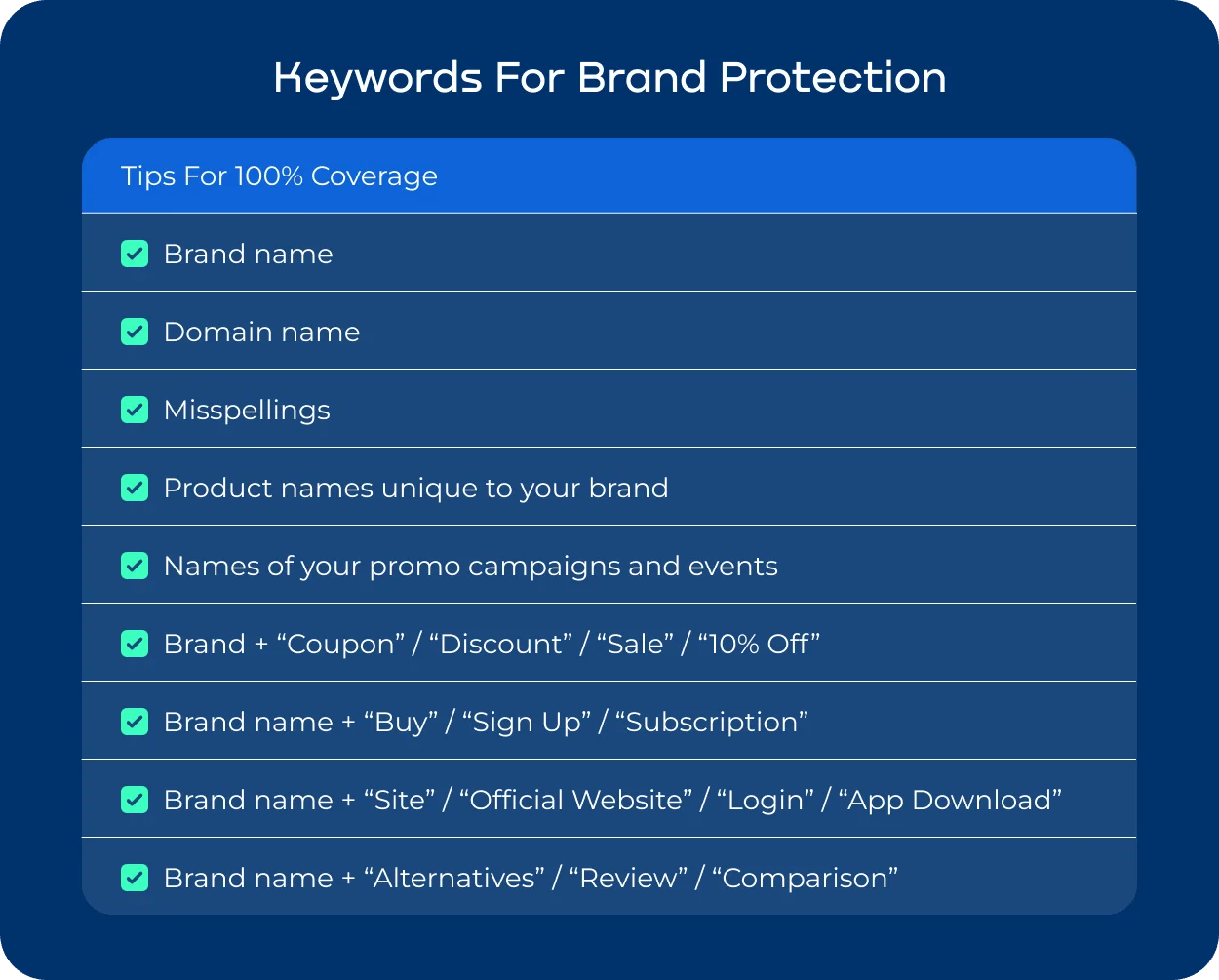
To achieve 100% effectiveness when monitoring trademark violations or affiliate fraud, use to following types of keywords:
-
- Brand name
-
- Domain name
-
- Misspellings
-
- Product names unique to your brand
-
- Names of your promo campaigns and events
-
- Brand + “Coupon” / “Discount” / “Sale” / “10% Off”
-
- Brand name + “Buy” / “Sign Up” / “Subscription”
-
- Brand name + “Site” / “Official Website” / “Login” / “App Download”
-
- Brand name + “Alternatives” / “Review” / “Comparison”
Use the finished list to check different GEOs:
-
For a manual check, use VPN and search location parameters to view the results for different GEOs.
-
When using Bluepear, create a project and choose the locations where you promote and sell your products, prioritizing the ones that show high demand. The tool will automatically scan search results and ads across search engines, providing maximum coverage.
Pro tip for Bluepear users: You can generate a list of keywords in any language using the in-build AI Assistant. It will give a good foundation for brand monitoring.
See how your keyword list performs in a real brand protection workflow. Create a project in Bluepear, and the tool will provide a full report with screenshots the same day.
Keyword Strategy Basics
Here we will look into the recommended keyword research services and basic steps for collecting keywords. These tips work for all purposes, including brand monitoring, SEO strategy, and PPC advertising.
Choosing a Keyword Research Tool
The table below shows popular free keyword research tools. Many of them have premium versions for in-depth analysis of queries and competitor keyword research. 1–3 tools is enough for most research purposes.
| Tool Name | Key Capabilities | Free Features |
|---|---|---|
| Google Keyword Planner | Helps identify keyword ideas related to products and brands, with indicative data on demand and ad competition | Full access to keyword suggestions and volume ranges when logged into a Google Ads account (no active spend required) |
| Semrush | Provides extensive keyword datasets for SEO and PPC, including competitive visibility and SERP insights | Limited daily searches and basic reports available on the free plan |
| KWFinder (Mangools) | Focuses on discovering long-tail keywords with clear metrics and a user-friendly workflow | Restricted number of keyword lookups per day in the free version |
| Ubersuggest | Combines keyword discovery with content and competitor insights | Daily caps on keyword searches and limited access to metrics |
| Moz Keyword Explorer | Designed to evaluate keyword potential using difficulty, CTR, and prioritization signals | Up to 10 keyword queries per month without a paid subscription |
| Ahrefs Keyword Generator | Generates keyword ideas based on search demand and ranking difficulty | Access to keyword suggestions with partial metrics only |
| Keyword Tool | Expands keyword lists using autocomplete data from multiple platforms and search engines | Keyword ideas available without metrics; detailed data requires a paid plan |
| Google Trends | Lets you track keyword popularity over time, conduct seasonality analysis, and evaluate geographic interest | Full access to trend data, comparisons, and geographic insights |
| Soovle | Collects autocomplete suggestions from various search engines and marketplaces | Unlimited keyword idea generation without restrictions |
Step-by-Step Keyword Research Analysis
Whether you’re planning an ad campaign, working on SEO, or preparing for affiliate compliance monitoring, the basic steps for building a semantic core are similar. In-depth research takes more time, but still follows the same logic.
We recommend doing your research in the following order to achieve maximum efficiency.
1. Define Goals
Your list of keywords will be different depending on its purpose.
For example:
- • PPC advertising focuses on transactional and navigational keywords
- • Trademark monitoring uses everything that has to do with brand and product name
- • SEO covers the full range of keyword intents, typically separating blog content strategy into its own dedicated effort
2. Brainstorm Seed Keywords
This step doesn’t involve keyword research services yet. Simply write down the search phrases you think your target audience is likely to use. Best practice here is to involve not only the marketing team, but also the people who get customer feedback directly — sales department, customer support, account managers, etc. Frontline employees will know what words the target audience actually uses, and online support specialists might even remember the typical spelling mistakes that you will also need.
3. Use a Keyword Research Tool
Use specialized tools to expand the list of phrases you made manually. This step can take anywhere from a couple of hours to a full workday or two — that heavily depends on your niche, company size, and goals.
4. Analyze Search Volume & Difficulty
Some keyword research services show search volume. It is a metric that indicates how many users search a certain phrase in a month. The higher the number, the more traffic the keyword can potentially bring, and the more challenging the competition in PPC and SEO will be. Prioritize by traffic potential, but don’t lose sight of the keywords with lower search volume and strong intent. They may bring qualified traffic and conversions and are less expensive to promote.
5. Study Competitors
This step requires a keyword research tool that provides in-depth analysis. The popular options are Ahrefs and Semrush.
Competitor keyword research can provide you with search phrase ideas that you might’ve missed earlier. The keywords competitors actively invest in are very likely the ones that bring them leads. You should prioritize those too.
Also check if competitors are missing out on any promising search phrases. Not only will they help you achieve your goals, but using them might be less expensive due to lower competition.
6. Group & Categorize Keywords
Group keywords by topic, intent, product line, or funnel stage to see how they work together.
Clear clustering helps you avoid keyword cannibalization in SEO, build tighter ad groups in PPC, and define precise monitoring rules for brand, affiliate, or competitor-related queries. A well-organized list is easier to scale and maintain over time.
7. Evaluate Search Intent
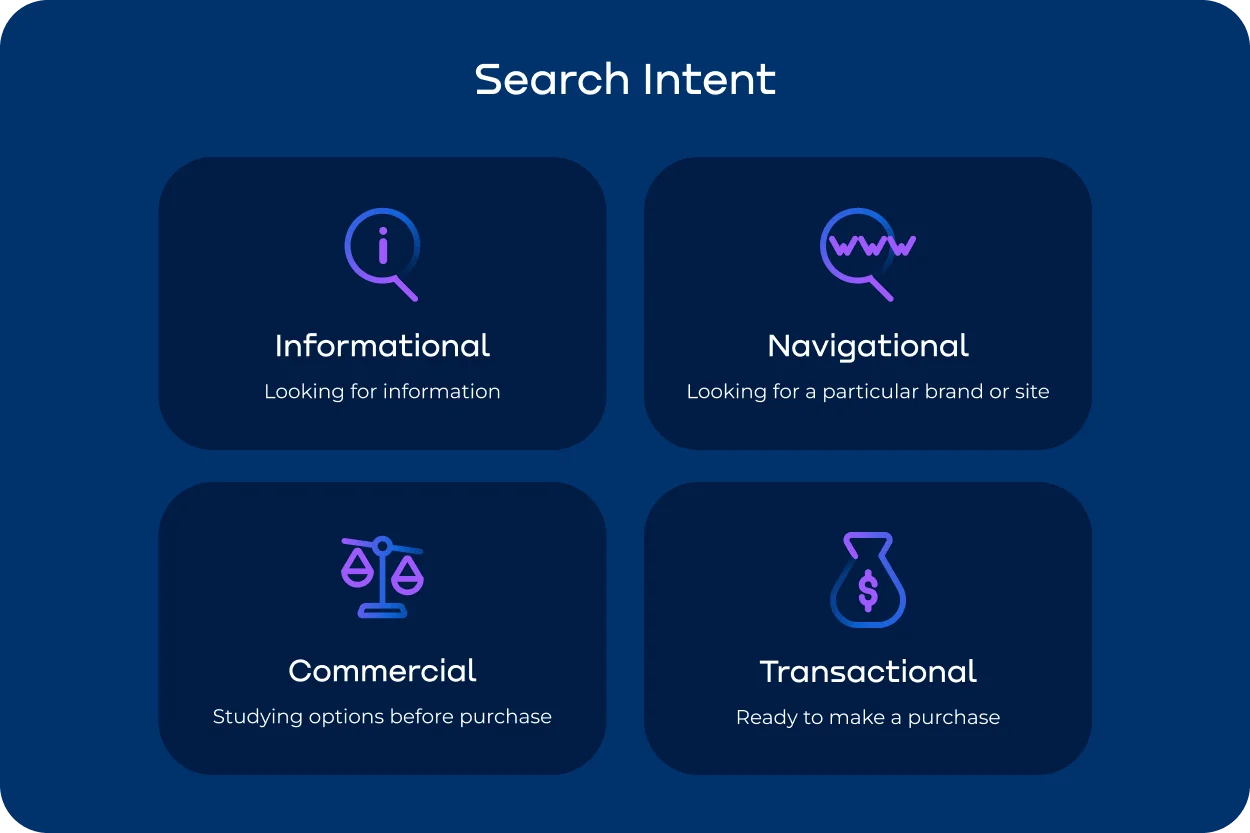
Not all keywords signal the same user motivation. Review you list and validate the intent:
- • Informational
- • Navigational
- • Commercial
- • Transactional
Run a competitor keyword research and analyze the search results — search engines put pages that match the intent on top. For example, if the first page of Google includes mostly articles and blog posts, the keyword intent is clearly informational.
This step prevents mismatches — for example, pushing sales-driven pages for research-oriented queries, or overlooking brand-related keywords that require closer monitoring. Correct intent alignment directly impacts conversion rates, ad efficiency, and compliance accuracy.
8. Select Target Keywords
Keep your goals in mind — keyword research tools may offer many suggestions, but not all of them align with what you need.
From each group, define primary and secondary keywords based on intent fit, competition level, and business value. Primary keywords shape core pages, ad groups, or monitoring scenarios. Secondary keywords support them with variations, long-tail queries, and brand modifiers.
The goal of this step is to focus on keywords that can realistically deliver measurable results without going over your marketing budget.
9. Monitor & Update
Search behavior, competition, and SERP layouts change constantly. Track rankings, traffic, conversions, and visibility shifts — especially for brand, trademark, and high-intent keywords. Regular reviews help you spot new opportunities, detect risks early, and keep your keyword strategy aligned with real market dynamics.
Brand Keyword Research Guide
Brand keywords typically include:
- • the brand name and product names
- • brand + product category, service, pricing, or reviews
- • brand-related domains
- • coupon, promo, and discount modifiers
- • misspellings, transliterations, and informal variations
If a query clearly implies an expectation of interacting with a specific brand, it should be treated as brand-related.
The impact of brand keywords scales with brand size and recognizability: the more people have heard of your company and product, the more conversions brand traffic can bring. And the bigger the need for brand protection. Why? Because brand keywords are often exploited by competitors and affiliates to capture high-intent traffic at minimal cost.
Common patterns include:
- • bidding on brand terms to intercept users close to conversion
- • disguising affiliate ads as official brand listings
- • routing traffic through intermediary or coupon-based landing pages
This behavior is especially common in e-commerce, SaaS, travel, and finance, where brand recognition establishes trust.
Typical gaps in brand keyword strategies include:
- • focusing only on exact brand matches
- • ignoring long-tail and modified queries
- • failing to separate keywords by intent
- • overlooking brand usage in affiliate and coupon contexts
These blind spots often result in lost visibility where user intent is strongest. To help you ensure full coverage, let’s dive into the keywords that are often overlooked: misspellings, coupon queries, and domain names.
Misspellings and Variations
Misspellings are very common, especially for the brands that promote and sell their products internationally. Even well-established brands like Adidas can receive a meaningful share of traffic through incorrect spellings.
Types of variations to account for are:
- • spelling errors
- • transliteration
- • merged or split words
Each category can form a distinct and scalable keyword cluster.
Misspelled brand queries also hide certain dangers, as they are commonly used by fraudulent actors. The common uses are: redirects, fake websites, misleading promotions, and affiliate link hijacking. **That makes misspellings a must-have on the list of keywords to monitor for brand protection. **
If you don’t know what spelling mistakes and typos your customers make, try using keyword research services — specialized tools can highlight variants you’re unaware of.
Domain Names as Keywords
In many cases, a company’s domain differs from its brand name: shortened versions, legacy domains, or alternative TLDs. Users often search for the domain directly, especially when trying to reach what they believe is the official website. Which means, these queries should be treated as brand-level keywords.
Domain searches are frequently exploited because they:
- • signal strong navigational intent
- • bypass traditional brand keyword protections
- • are easily imitated through lookalike domains
This makes them a common entry point for impersonation and ad hijacking. Domain keywords should be monitored across both organic and paid results.
Coupon and Discount Queries
Coupon-related searches consistently show high violation rates. They combine strong transactional intent with weak user scrutiny, making them a target for abuse.
Types of coupon-related brand keywords:
- • brand + coupon
- • brand + discount / deal / promo
- • “exclusive” or “secret” codes
Affiliates often disguise brand campaigns as coupons. A frequent tactic is presenting brand bidding as a “value-add” coupon campaign. In reality, these ads often capture users already intending to purchase, redirecting traffic through affiliate-controlled pages. This makes coupon keywords a critical category for brand and compliance monitoring.
Turning Keyword Research Analysis Into a Brand Monitoring Strategy
Protecting branded traffic is a basic necessity for bigger businesses, especially the ones with affiliate programs. Industry data shows that over 38% of brand traffic in affiliate networks in 2025 is exposed to brand bidding, impersonation, and last-click hijacking (mFilterIt).
To build an effective brand monitoring workflow, you need to strategically use your brand keywords. The keywords that are typically abused are directly tied to brand revenue, paid traffic, and trademark exposure.
High-risk keywords usually include:
- • Core brand terms used in paid ads
- • Brand + coupon / discount / promo combinations
- • Misspellings
- • Domain-based queries
These keywords need continuous monitoring, as they are most likely to reveal trademark misuse, affiliate abuse, or paid traffic interception.
A scalable brand monitoring strategy relies on automation. Manual checks create blind spots — especially in paid search and affiliate environments where abuse is often deliberately hidden. According to mFilterIt, 45% of affiliate fraud cases involved cloaking in 2024. Manual checks aren’t enough for hidden ad fraud detection on such a scale.
Why manual brand monitoring does not scale:
- • Search results change constantly
- • Violations can appear and disappear within hours
- • Large keyword sets become impossible to review consistently
Tools like Bluepear help brands move from reactive checks to proactive brand protection, where risks are detected early and acted on before they impact performance or reputation. Give Bluepear a try — using your list of brand keywords it continuously analyzes search engines and ads, flagging patterns linked to affiliate policy violations and brand bidding abuse.

Conclusion
Effective brand protection starts with properly chosen keywords. A complete, well-structured keyword list turns scattered monitoring efforts into a systematic defense against brand bidding, affiliate abuse, and impersonation. As search behavior and fraud tactics evolve, continuously updating and prioritizing brand keywords is what allows businesses to protect high-intent traffic, preserve attribution accuracy, and maintain control over how their brand appears across search results.
FAQ
Why is keyword research critical for detecting trademark violations?
Trademark violations in search almost always start with keywords. Affiliates, resellers, and competitors rely on brand terms, misspellings, and incentive-based queries to intercept high-intent traffic. Without structured research and monitoring, these violations remain invisible.
Which keyword types are most commonly used for brand traffic abuse?
The most frequent abuse occurs around a small set of predictable keyword patterns:
- • Core brand keywords used in paid ads by unauthorized third parties
- • Brand misspellings and variations that bypass basic filters
- • Brand + coupon queries designed to hijack conversions
- • Domain-based keywords that redirect users away from the official site
Monitoring these categories consistently is essential for detecting brand bidding, impersonation, and other forms of fraud.
How often should brands update their keyword list or run competitor keyword research?
Keywords should be monitored continuously, not periodically. Keyword lists should be reviewed and expanded regularly, and immediately updated after major campaigns, promotions, or affiliate program changes. As new abuse patterns emerge, outdated keyword lists quickly create blind spots in brand protection. To make the process of systematically updating semantic cores easier use a free keyword research tool — you can choose one in the table we provided in this guide.